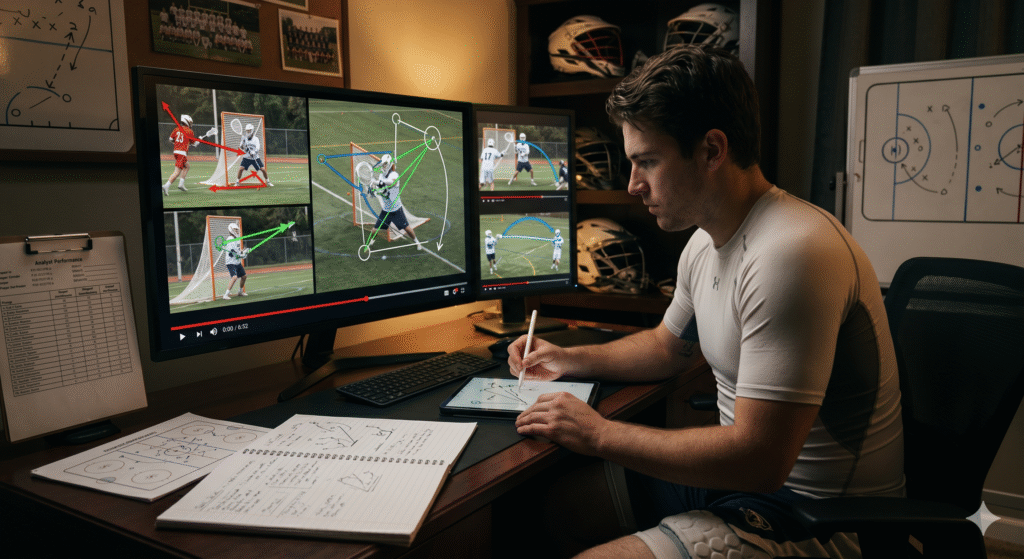
As a lacrosse goalie coach, I see a highly predictable pattern unfold with almost every new player I train.
We start working together, and within the first month, the goalie experiences a massive improvement in their performance. But then, the honeymoons ends.
By month two or three, that rapid growth completely stalls out. They hit a performance plateau that can last anywhere from three to four months, leaving both the player and their parents wondering, “What went wrong?”
The short answer? Nothing went wrong. It is entirely normal. If you or your goalie are currently stuck in this post-breakthrough slump, understanding the psychology and mechanics behind this shift is the key to pushing through to the next level. Here is exactly why the early gains stall and how to overcome it.
Phase 1: The Illusion of the “Easy Fixes”
When a goalie first sits down with an experienced coach, they are exposed to technical concepts, mechanical tweaks, and tactical ideas they have simply never seen or heard before.
Because a seasoned coach can easily spot low-hanging fruit (like a slight imbalance in a stance, moving too early, or poor positioning) they can implement quick fixes that yield immediate results.
This initial spike is real progress. However, it represents the absolute easiest gains the goalie will ever make. Once those fundamental, surface-level errors are corrected, the real work begins.
Phase 2: The Two Traps That Cause the Post-Breakthrough Slump
Once the immediate corrections are made, goalies almost universally enter a long, grueling stretch where noticeable progress seems to vanish. This happens for two distinct reasons:
1. The Complacency Trap
Human psychology is predictable. When a young goalie experiences an immediate, massive leap in skill, their confidence naturally skyrockets.
The danger is that they often unconsciously assume that this steep trajectory will just continue forever without an increase in baseline effort. They get comfortable, they rely on their newfound “good habits,” and they stop fighting for the fractional improvements required to get even better. They expect the coach to keep handing them easy wins, but the easy wins are officially gone.
2. The Asymmetry of Learning
In goaltending, certain concepts click instantly because they align naturally with an athlete’s baseline physical traits or existing habits.
The secondary tier of elite goalie skills, however, requires rewriting muscle memory and tackling individual weaknesses, and oftentimes, overriding bad habits that have 1000s of repetitions already. These “hard things” take an immense amount of cognitive load, repetitive failure, and time to fully process. While a goalie might learn five new things in week one, the next five things might take three months of relentless drilling before showing up in game play.
How to Break Through the Slump
If you want to survive the multi-month performance dead-zone, change how you view it. This is the phase where temporary adjustments solidify into permanent muscle memory.
To break out of the slump, you have to actively combat complacency. Lean into the specific drills that feel uncomfortable, be honest with yourself as you review your film, and keep showing up for the thousands of monotonous reps required to make the hard skills look easy.
The immediate growth gets you into the conversation, but how you handle the slow months determines whether you become an elite shot-stopper. Keep pushing through!!
Have Any Questions ?
We know every goalie’s journey is different. If you have questions about training, packages, or what’s best for your game, we’d love to help.